
How to Build Strong Concrete Deck Supports: A Simple Guide
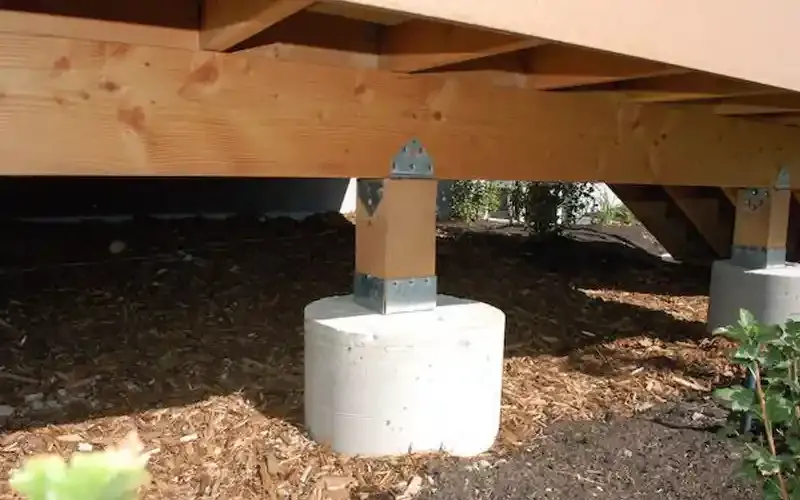
Are you planning to build a beautiful deck that will last for years? The secret to a long-lasting deck isn't what you see on top - it's what lies underneath!
Just like a strong friendship needs a solid foundation, your deck needs proper concrete deck support to stay strong and safe.
We understand how confusing it can be to figure out the right way to create supports that won't crack, sink, or fail over time.
In this friendly guide, we'll walk you through the simple steps to build concrete deck supports that will keep your outdoor space sturdy for many happy gatherings to come.
Why Concrete Deck Supports Matter
Have you ever seen a deck that's starting to sag or lean to one side? That's what happens when the supports aren't done right!
Good concrete deck supports:
Hold up your deck against the forces of weather and weight
Prevent sinking into soft soil
Stop frost from pushing supports upward in cold climates
Keep your deck level and safe for years
According to the North American Deck and Railing Association, poor deck support is one of the main reasons decks fail and can lead to dangerous collapses.
Understanding Frost Lines and Why They Matter
Before you dig your first hole, you need to know about frost lines!
The frost line is how deep the ground freezes in winter. If your concrete deck supports don't go below this line, they'll move up and down as the ground freezes and thaws.
In southern states, frost lines might be just a few inches deep
In northern states, they can be 48 inches or deeper!
Find your local frost line by checking with your county building department or call your local building inspector.
How Thick Should a Footing Be?
The thickness of your concrete footings is super important for supporting your deck properly.
For most residential decks:
Footings should be at least 8-12 inches thick
The width should be at least 12 inches across (or 3 times the post width)
Wider is better for softer soils or bigger decks
According to the International Residential Code, the thickness and width depend on the weight your deck will hold and your soil type
Materials You'll Need
Let's gather everything before we start:
Concrete mix (80-pound bags)
Gravel for drainage
Cardboard tube forms (sonotubes)
Rebar for reinforcement
Post anchors (galvanized or stainless steel)
Shovel and post hole digger
Wheelbarrow for mixing
Level
Tape measure
Safety glasses and gloves
7 Steps to Create Perfect Concrete Deck Supports
Step 1: Mark Your Support Locations
Use stakes and string to outline your deck perimeter.
Mark where each support post will go.
Keep posts no more than 8 feet apart for good support.
Check your measurements twice before digging!
Step 2: Dig the Holes
Dig holes at each marked location.
Make holes at least 3 times wider than your posts.
Dig below your local frost line - this is super important!
Make the bottom of the hole wider than the top for better stability.
The Family Handyman recommends "bell-shaped" holes that are wider at the bottom to prevent frost from pushing the footings up.
Step 3: Add Drainage Gravel
Pour 6 inches of gravel into the bottom of each hole.
Tamp the gravel down firmly.
This creates drainage so water doesn't collect under your footings.
Proper drainage prevents your cement deck supports from cracking due to water freezing and expanding.
Step 4: Place Your Concrete Forms
Cut cardboard tube forms (sonotubes) to extend from the gravel to about 3 inches above ground level.
Center the tubes in your holes.
Check that tubes are perfectly level using a bubble level.
Backfill around the outside of tubes with soil and tamp firmly.
Step 5: Add Reinforcement
Cut pieces of rebar a few inches shorter than the depth of your hole.
Place 2-3 pieces of rebar vertically in each hole.
Make sure they don't touch the sides of the tube.
According to This Old House, rebar strengthens your concrete deck support and helps prevent cracking.
Step 6: Mix and Pour Concrete
Mix concrete according to package directions.
Pour concrete into the forms until slightly overfull.
Tap the sides of the tube to remove air bubbles.
Smooth the top with a trowel, creating a slight slope away from the center for water runoff.
For a standard 12-inch diameter, 48-inch deep footing, you'll need about 3-4 bags of 80-pound concrete mix.
Step 7: Install Post Anchors
While concrete is still wet, press post anchors into the center of each footing.
Use a level to ensure anchors are perfectly straight.
Let concrete cure for at least 3-4 days before building on top of it.
The American Wood Council recommends using anchors that keep wood posts from direct contact with concrete to prevent rot.
Common Mistakes to Avoid
Watch out for these problems that can ruin your hard work:
Not digging deep enough - Footings above the frost line will heave and shift
Making footings too small - They might not support the weight of your deck
Using too little concrete - Weak spots can develop and crack
Not checking local building codes - You might need permits or inspections
Skipping the drainage gravel - Water trapped under footings causes cracks
Concrete Deck Support for Different Soil Types
Your soil type affects how you build your supports:
Clay Soil:
Make footings wider
Add extra drainage gravel
Consider consulting a soil engineer for very heavy decks
Sandy Soil:
May need wider footings to distribute weight
Compact the soil well before adding gravel
Rocky Soil:
Remove large rocks that could create pressure points
Make sure the bottom of the hole is flat and level
When to Call a Professional
Sometimes it's smart to get help:
If your deck will be very large or tall
If you have unusual soil conditions
If you're not comfortable with heavy digging
If local codes require engineer-approved plans
Professional deck builders often have special tools like augers that make digging deep holes much easier.
On the flip side, if you're learning how to build a ground level deck rather than a taller structure, you may not need the same depth of footings at all — many low decks under 30 inches can use simpler deck blocks instead of poured concrete supports, which is worth checking with your local building department before you invest in the full footing process described above.
Conclusion
Preventive Measures
Building strong concrete deck supports is like making a good investment - it pays off for years to come! By following these simple steps and taking the time to do it right, you'll create a solid foundation for countless barbecues, family gatherings, and quiet evenings enjoying your outdoor space.
Remember that the most important parts of your deck are the parts you can't see: those sturdy concrete deck supports holding everything safely in place. Your future self will thank you for the care you took today!
If you're in Jacksonville or Columbus check our local service page for pricing

© 2026 | All Rights Reserved | Privacy Policy